


Remote Work Vs In-House Admin: Which Is Better For Your Growing Business?
The administrative backbone of your growing business demands a strategic approach that balances cost-effectiveness with operational control. As service-based entrepreneurs face increasing demands on their time and resources, the decision between remote administrative support and in-house staff becomes critical to sustainable growth.
Remote administrative services typically deliver superior cost-effectiveness and scalability for growing businesses, while in-house teams provide enhanced control and immediate responsiveness. The optimal choice depends on your specific business model, growth trajectory, and operational requirements in today's evolving marketplace.
The Growing Business Administrative Challenge
Modern entrepreneurs encounter unprecedented administrative complexity as their businesses expand. Customer relationship management, financial record-keeping, appointment scheduling, and communication coordination consume valuable hours that could be directed toward revenue-generating activities.
Statistical data reveals that business owners spend approximately 40% of their time on administrative tasks rather than core business development. This administrative burden intensifies as businesses grow, creating a critical decision point: invest in dedicated in-house staff or leverage remote administrative support.
The choice becomes particularly crucial for service-based businesses, where client relationships and operational efficiency directly impact profitability. Understanding the fundamental differences between these approaches enables informed decision-making that aligns with long-term business objectives.

The Strategic Case for Remote Administrative Support
Remote administrative services revolutionize operational efficiency through cost-effective scalability and specialized expertise. Virtual assistant providers eliminate traditional employment overhead, including salaries, benefits, training costs, and physical workspace requirements.
Financial analysis demonstrates that remote administrative support reduces operational costs by 30-60% compared to equivalent in-house positions. These savings extend beyond direct compensation to include reduced insurance premiums, equipment expenses, and facility overhead.
Scalability represents the most significant advantage of remote administrative arrangements. Growing businesses can adjust support levels immediately without lengthy hiring processes or long-term commitments. During busy seasons, additional support becomes available within days rather than weeks or months required for traditional hiring.
Access to specialized skills distinguishes remote services from typical in-house capabilities. Professional virtual assistant companies maintain teams with diverse expertise spanning customer service, digital marketing, bookkeeping, and project management. This breadth of knowledge would be prohibitively expensive to replicate internally.
Remote support provides operational continuity that in-house teams cannot match. Professional virtual assistant services maintain backup systems and redundant staffing to ensure consistent coverage during vacations, illnesses, or unexpected absences.
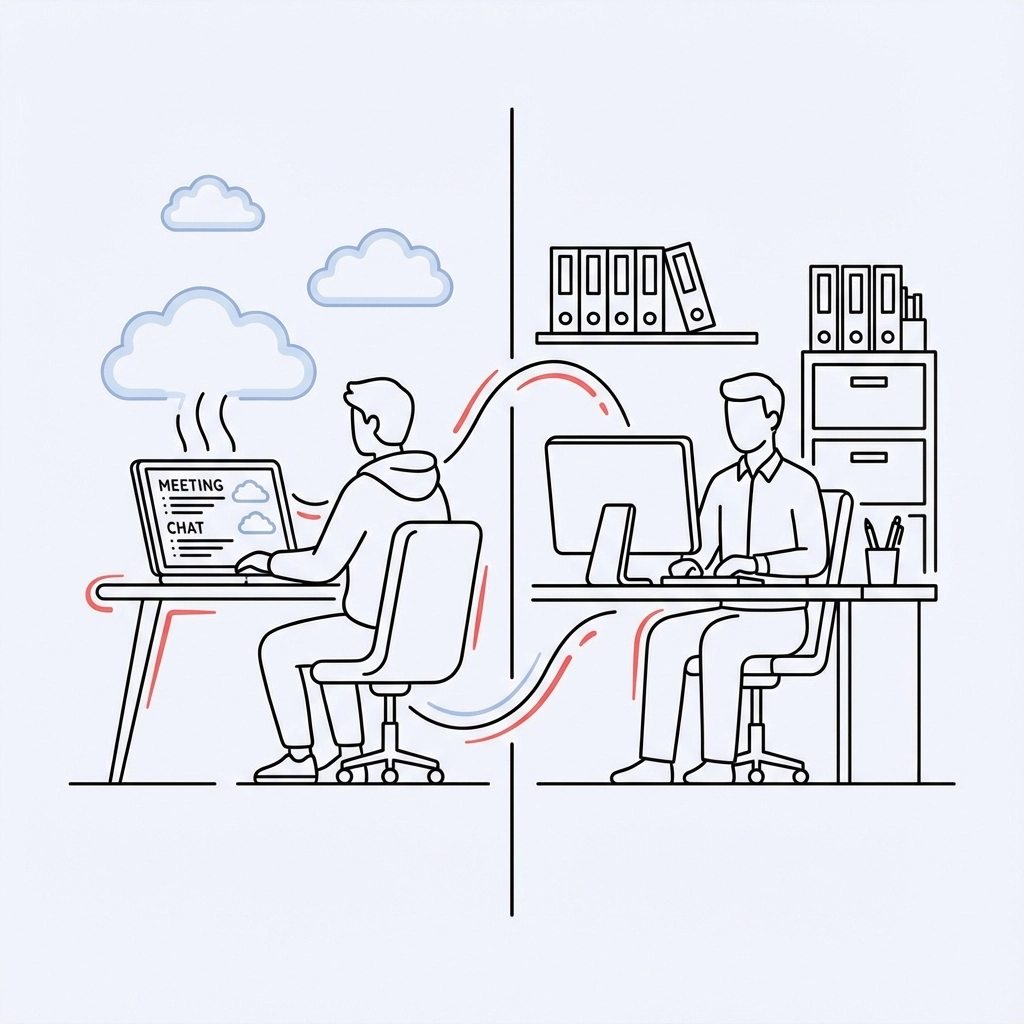
The Compelling Case for In-House Administrative Staff
Direct control over administrative operations provides immediate responsiveness and deep organizational integration. In-house staff members develop comprehensive understanding of business processes, client preferences, and operational nuances that external providers require time to develop.
Physical presence enables instantaneous communication and collaborative problem-solving. When urgent situations arise, in-house team members can address issues immediately without communication delays or scheduling conflicts common with remote arrangements.
Cultural integration emerges as a significant benefit of in-house administrative staff. These team members embody company values, understand brand voice, and represent the organization with authentic familiarity. This deep connection proves particularly valuable for client-facing administrative functions.
Data security and confidentiality receive enhanced protection through in-house management. Sensitive financial information, client details, and strategic business plans remain within controlled organizational boundaries rather than being shared with external providers.
Customization potential reaches its maximum with dedicated in-house staff. These team members can adapt to unique business requirements without external constraints or service limitations imposed by remote providers.
Critical Evaluation Factors for Your Business Decision
Business growth trajectory fundamentally influences the optimal administrative approach. Rapidly expanding companies benefit from remote services' scalability, while established businesses with predictable administrative needs may prefer in-house consistency.
Budget considerations extend beyond immediate costs to include long-term financial implications. Remote services offer predictable monthly expenses without fluctuation, while in-house staff involves variable costs including potential turnover, training, and benefit increases.
Industry-specific requirements often dictate administrative approaches. Healthcare practices, legal firms, and financial services may require enhanced data security and compliance measures that favor in-house arrangements, while consulting businesses and creative agencies benefit from remote flexibility.
Geographic location impacts both hiring options and cost structures. Businesses in high-cost metropolitan areas find remote services particularly attractive, while those in regions with lower labor costs may discover in-house staff more economically viable.
Technology infrastructure influences operational effectiveness regardless of chosen approach. Companies with robust digital systems can leverage remote services effectively, while those requiring significant hands-on administrative tasks may benefit from in-house presence.

The Hybrid Solution: Best of Both Approaches
Co-managed administrative strategies combine the advantages of both remote and in-house support. This approach maintains core in-house capabilities for immediate needs while leveraging remote expertise for specialized tasks and overflow capacity.
Successful hybrid implementations typically designate specific functions to each approach. Customer service and basic data entry suit remote providers, while client meetings and confidential document handling remain with in-house staff.
Cost optimization through hybrid strategies allows businesses to maintain essential control while accessing specialized skills. This approach provides operational flexibility without sacrificing the immediate responsiveness that growing businesses require.
Making the Strategic Choice for 2025
Economic uncertainty and evolving workplace dynamics favor flexible administrative solutions. Remote services provide adaptability to changing business conditions without long-term commitments or substantial infrastructure investments.
Technology advancement continues to eliminate traditional barriers to remote administrative support. Cloud-based systems, secure communication platforms, and project management tools enable seamless collaboration regardless of physical location.
The competitive landscape increasingly rewards businesses that optimize operational efficiency. Companies that allocate resources strategically toward growth activities rather than administrative overhead gain significant market advantages.
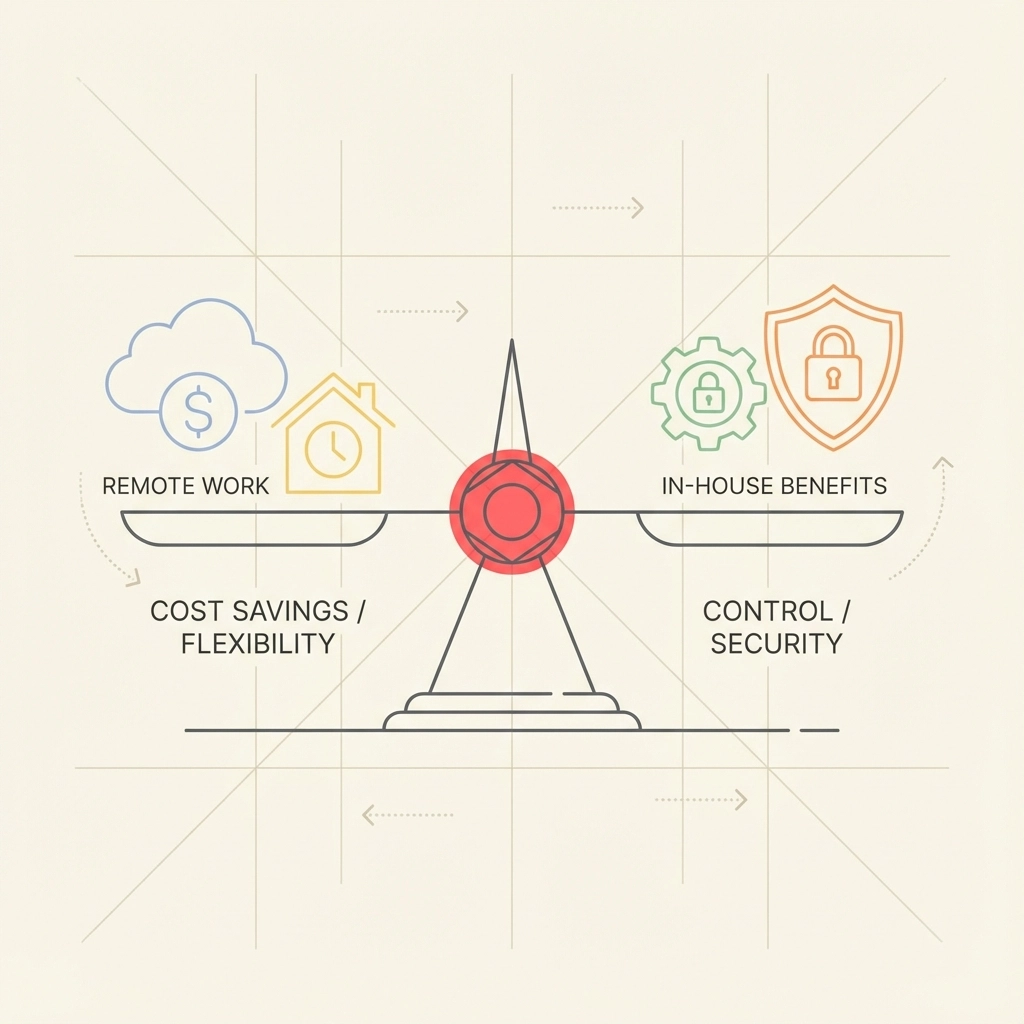
Implementation Strategies for Your Decision
Successful remote administrative partnerships require clear communication protocols and defined expectations. Establishing regular check-ins, detailed task descriptions, and performance metrics ensures optimal results from virtual arrangements.
In-house hiring demands comprehensive planning including workspace preparation, technology setup, and integration procedures. Consider the full timeline from job posting to productive contribution when evaluating this approach.
Professional virtual assistant services like ENK Professional Services offer structured packages that eliminate guesswork from remote administrative support. These services provide immediate access to trained professionals without hiring complications or uncertainty.
Trial periods allow businesses to evaluate administrative approaches without long-term commitments. Many remote providers offer initial consultation periods to assess compatibility and effectiveness.
Taking Action on Your Administrative Strategy
Begin your evaluation by documenting current administrative tasks and time investments. This analysis reveals which functions could benefit most from remote support versus those requiring in-house attention.
Calculate the total cost of ownership for each approach including hidden expenses and opportunity costs. Consider not just direct costs but also the value of time saved for business development activities.
Professional consultation can clarify the optimal administrative strategy for your specific situation.Initial VA consultations provide personalized recommendations based on your business model and growth objectives.
The administrative decisions you make today will impact your business capacity for years to come. Choose an approach that not only meets current needs but also supports your long-term growth vision and operational goals.

Smart business owners recognize that administrative efficiency directly correlates with business success. Whether through remote services or in-house teams, investing in proper administrative support enables focus on revenue-generating activities that drive sustainable growth.
Your next step involves honest assessment of your administrative needs and strategic evaluation of available options. The right choice will streamline operations, reduce stress, and position your business for continued expansion in 2025 and beyond.

Comments