


Are You Making These 7 Common Virtual Assistant Hiring Mistakes?
Hiring a virtual assistant represents a pivotal moment for growing businesses. The decision signals your readiness to scale operations and delegate critical tasks. However, most entrepreneurs approach VA hiring with outdated assumptions and poor practices that doom the relationship from day one.
Research consistently shows that businesses with well-integrated virtual teams experience 40% faster growth rates compared to those struggling with administrative bottlenecks. Yet the majority of first-time VA hires fail within six months: not due to lack of talent, but because of preventable hiring mistakes.
Understanding these common pitfalls transforms your approach from hopeful delegation to strategic team building. The difference between success and failure often comes down to recognizing what doesn't work and implementing proven alternatives.
Mistake #1: Over-Glamorizing the Entrepreneurial Journey
Constantly celebrating the excitement of entrepreneurship creates an unintended consequence: inspiring your VA to become your competition. When you repeatedly emphasize how amazing it is to run your own business during conversations and training sessions, you inadvertently plant seeds for future turnover.
Virtual assistants possess the same entrepreneurial instincts that drive many business owners. Hearing endless stories about the freedom, flexibility, and financial potential of business ownership naturally triggers their own aspirations. This phenomenon explains why many talented VAs suddenly announce they're starting their own ventures after months of excellent performance.

The Solution: Frame your business discussions around systems, processes, and team collaboration rather than personal entrepreneurial glory. Focus conversations on professional development within your organization and the value of specialized expertise. Emphasize how their role contributes to larger business objectives without constantly highlighting the appeal of independent business ownership.
Mistake #2: Skipping the Onboarding Process Entirely
Bringing a virtual assistant into your business and immediately assigning tasks creates confusion, frustration, and poor performance outcomes. This approach treats VAs like instant solutions rather than team members who require proper integration and training.
Effective onboarding establishes clear expectations, introduces company culture, and provides necessary context for decision-making. Without this foundation, even experienced VAs struggle to deliver results that align with your specific business needs and standards.
The Solution: Develop a structured onboarding process that spans the first two weeks of employment. Include company background information, detailed process documentation, communication protocols, and performance expectations. Schedule regular check-ins during this period to address questions and provide feedback. This investment in proper integration pays dividends through reduced errors and increased efficiency.
Mistake #3: Providing Vague Task Definitions
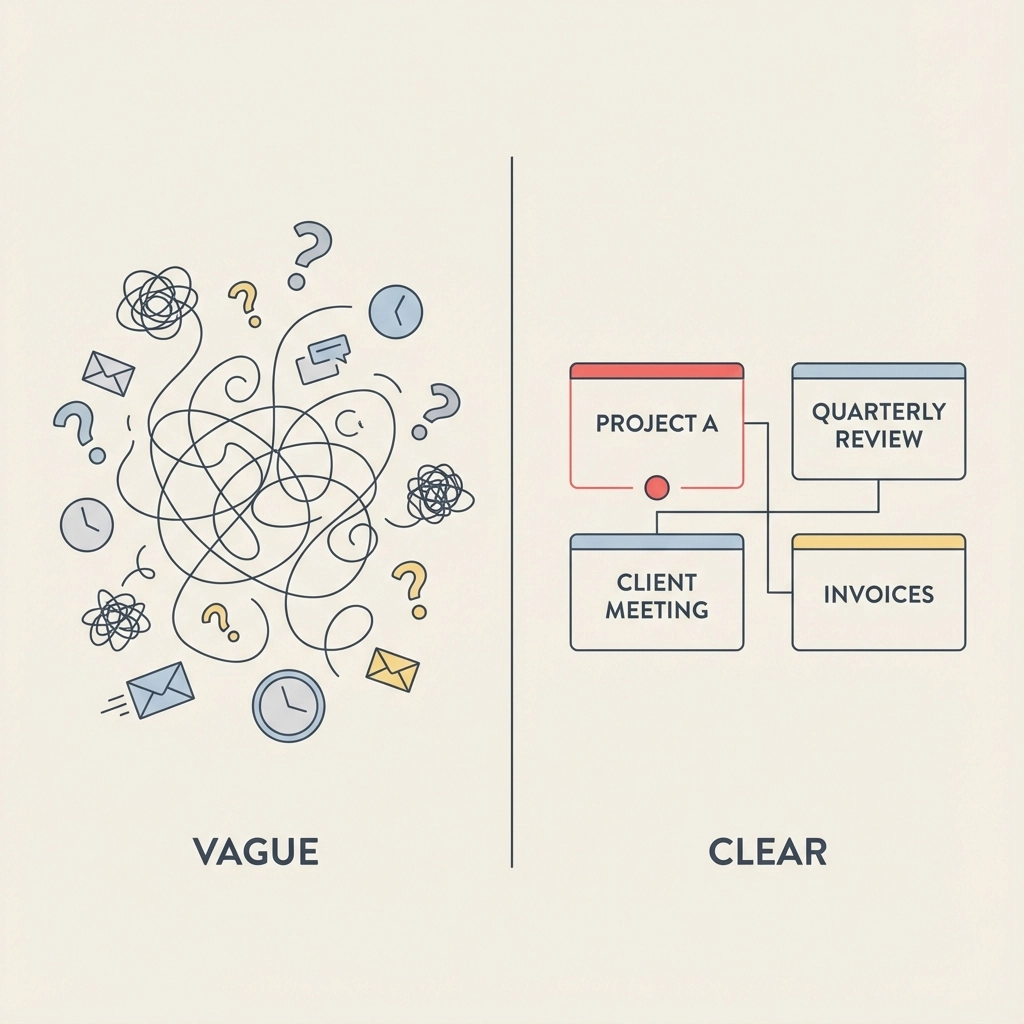
Assigning projects with unclear completion criteria guarantees disappointing results and wasted time. Saying "write a blog post" without specifying formatting requirements, image inclusion, SEO elements, or publication standards leaves too much room for interpretation.
Ambiguous instructions force VAs to guess at your expectations, leading to deliverables that require extensive revisions or complete redoing. This cycle frustrates both parties and undermines the efficiency gains that motivated hiring a VA initially.

The Solution: Create detailed task templates that specify exactly what "done" looks like for each type of assignment. Include formatting requirements, quality standards, deadlines, and review processes. Use checklists to ensure consistency across similar projects. The more specific your instructions, the better your outcomes will be.
Mistake #4: Isolating VAs from Business Results
Keeping virtual assistants disconnected from the outcomes of their work reduces motivation and prevents them from making informed decisions about priorities and approaches. When VAs understand how their tasks contribute to revenue, customer satisfaction, or operational efficiency, they perform significantly better.
This isolation also limits their ability to suggest improvements or identify potential issues before they become problems. VAs who understand business context become valuable strategic contributors rather than simple task executors.
The Solution: Share relevant business metrics and explain how specific tasks connect to larger objectives. Provide context for urgency levels and priority changes. Include VAs in appropriate team meetings or updates where they can see the broader impact of their contributions. This transparency creates engagement and enables better decision-making.
Mistake #5: Maintaining a Vendor Relationship Mentality
Treating virtual assistants as transactional service providers rather than team members creates distance and reduces commitment to your business success. This approach manifests in formal, impersonal communication and exclusion from team activities or strategic discussions.
VAs who feel like outsiders deliver adequate work but rarely exceed expectations or take initiative. They focus on completing assigned tasks rather than identifying opportunities for improvement or proactive problem-solving.
The Solution: Integrate VAs into your team culture through regular communication, inclusion in relevant meetings, and recognition of their contributions. Use collaborative tools that promote transparency and connection. Treat them as remote team members rather than external contractors, even if the legal relationship differs.
Mistake #6: Undervaluing VA Compensation
Paying below-market rates attracts VAs who will leave as soon as better opportunities arise. This approach creates a constant cycle of hiring, training, and losing team members, ultimately costing more than competitive compensation would.
Quality virtual assistants understand their market value and won't accept significantly lower rates unless they're gaining specific experience or skills. Even then, they'll move on once they've achieved their learning objectives.
The Solution: Research current market rates for the specific skills and experience level you require. Factor in the cost of turnover when evaluating compensation levels. Consider performance-based increases and bonuses that reward exceptional contributions. Competitive compensation improves retention and attracts higher-quality candidates.
Mistake #7: Assigning Random, Scattered Tasks
Constantly switching between unrelated assignments prevents VAs from developing expertise and efficiency in any particular area. This approach treats them as general problem-solvers rather than specialized team members who can add increasing value over time.
Random task assignment also makes it difficult to measure performance or provide meaningful feedback. VAs struggle to improve when their responsibilities lack focus and coherence.
The Solution: Concentrate VA responsibilities into specific functional areas where they can develop expertise and efficiency. Create clear role definitions that allow for skill development and performance improvement. Group related tasks together and establish regular workflows that build competency over time.
Building Successful VA Relationships
Avoiding these common mistakes requires treating virtual assistant hiring as a strategic business decision rather than a quick fix for overwhelming workloads. Successful VA relationships develop through proper planning, clear communication, and ongoing investment in the partnership.
The most effective approach involves defining specific outcomes you want to achieve, identifying the skills and experience needed to deliver those outcomes, and creating systems that support excellent performance. This foundation enables VAs to become valuable long-term team members who contribute to business growth.

Professional virtual assistant services understand these dynamics and can help you avoid costly hiring mistakes while building productive working relationships. The key lies in approaching delegation as team building rather than task dumping, creating conditions where both your business and your VA can thrive.

Comments